
Serengeti Hot Air Balloon Safari: Cost, Best Time & What to Expect

George Agapit
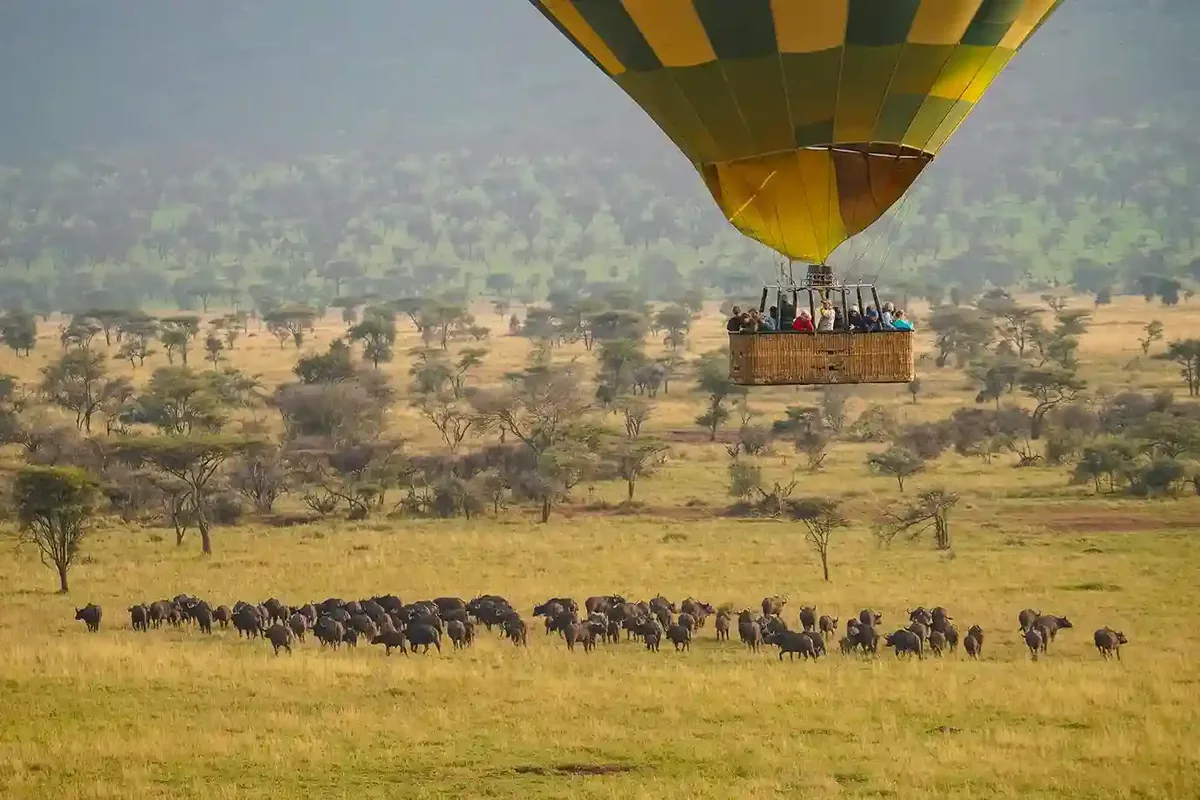
Tanzania Travel Specialist, Bushlife AdventuresA Serengeti hot air balloon safari offers something no game drive can replicate: the chance to see one of Africa's greatest wilderness areas unfold beneath you at sunrise. From the air, the landscape reveals a scale and continuity that is impossible to appreciate from the ground — wildebeest moving in long columns, giraffes threading between acacias, predators still active in the early light.
This guide covers everything you need to plan a balloon safari in the Serengeti — what happens on the day, which area to fly from, when to go, what it costs, and how to make the most of it if you're travelling as a couple or on a honeymoon.
What Makes a Serengeti Balloon Safari Different?
The Serengeti is famous partly because of its sheer scale — 14,750 square kilometres of protected wilderness that extends further than the eye can see from any ground-level viewpoint. A balloon gives you that scale. Floating above the plains at first light, with the horizon in every direction, is a different kind of experience from even the best ground-level game drive.
Unlike a vehicle safari, where the route follows roads and tracks, a balloon travels with the wind. No two flights follow exactly the same path. What you see depends on conditions that morning, which location you depart from and where the wildlife happens to be. This unpredictability is part of what makes it special.
The experience typically combines:
- A pre-dawn departure and early sunrise views
- Aerial perspective over the Serengeti plains and river systems
- Wildlife visible from above — herds, predators, waterways
- Peaceful, quiet flight with no vehicle engine noise
- Strong photography opportunities, particularly for landscape shots
- A celebratory bush breakfast after landing
What to Expect on the Day of Your Balloon Safari
Understanding the full sequence of the morning helps you prepare properly and get more out of the experience.
Early Morning Pickup
Your morning begins well before sunrise. You'll be collected from your safari lodge or camp — still dark outside — and transferred to the balloon launch site. Bring a warm layer: Serengeti mornings can be considerably cooler than afternoons, and the pre-dawn air is often cold enough to need a fleece or light jacket.
Balloon Preparation and Safety Briefing
At the launch site you'll meet the pilot and crew and receive a safety briefing covering boarding, in-flight positioning and the landing procedure. Pay attention — the instructions matter, particularly for landing, which can be more dynamic than first-time passengers expect.
Watching the balloon inflate in the darkness — an enormous envelope slowly coming to life against the pre-dawn sky — is an experience in itself.
Take-Off at Sunrise
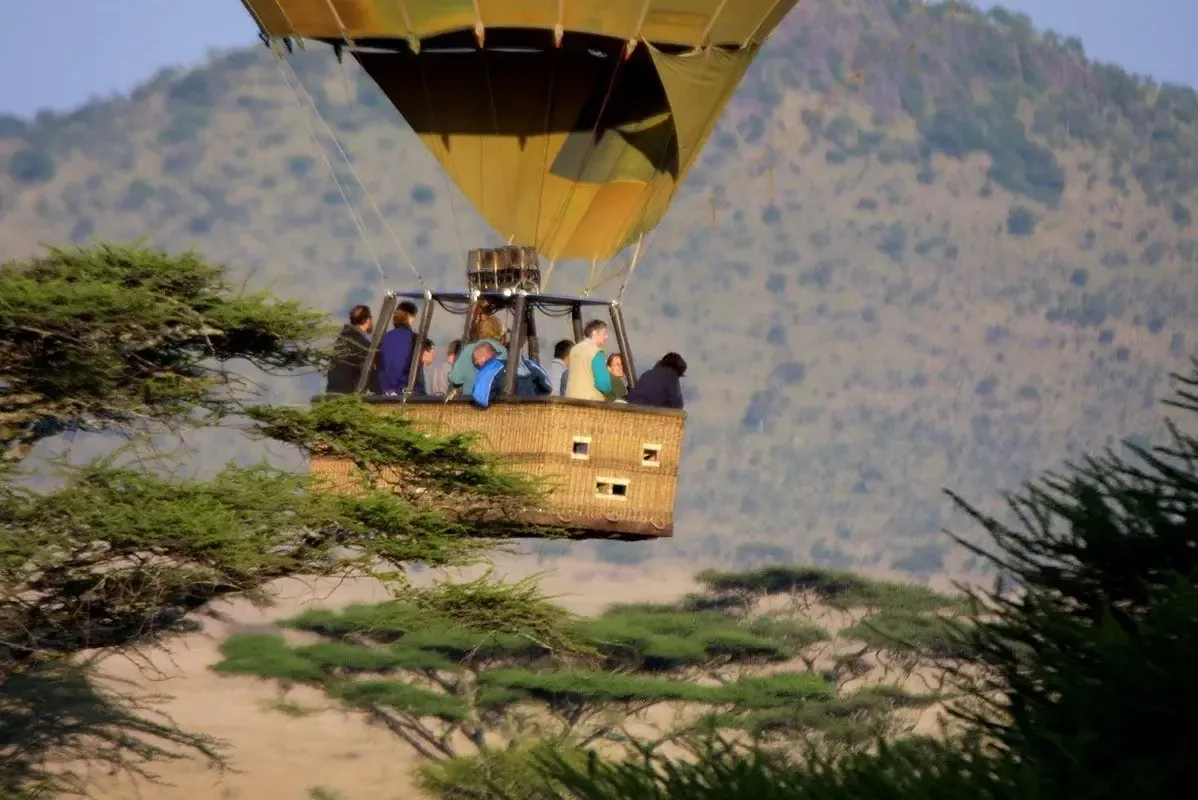
As light begins to appear on the horizon, the balloon lifts gently from the ground. The pilot may float low over the grasslands at first, giving clear views of animals below, before ascending for wider panoramic views. Altitude varies throughout the flight depending on wind conditions and what the pilot wants to show you.
Wildlife From the Air
From altitude, the Serengeti reveals patterns that are invisible from the ground. You might see a pride of lions returning from a night hunt, herds of wildebeest or zebra spread across the plains, or elephants moving through the bush in the early light. The aerial perspective shows how animals move and use the landscape — something even experienced safari-goers find genuinely revelatory.
A balloon safari should complement your game drives rather than replace them. Ground-level encounters — lions at five metres, a leopard in a tree, a cheetah mid-sprint — remain the domain of the vehicle safari. The balloon adds a different dimension to the overall experience.
Landing and Bush Breakfast
After approximately one hour of flight, the pilot selects a landing area. Landings can be lively — listen carefully to the crew's instructions and follow them. After touching down, a traditional celebratory breakfast is laid out in the bush. This is a genuine highlight for many guests: sitting at a table in the middle of the Serengeti, after floating above it at sunrise, with no other sign of civilisation in sight.
How Long Does the Full Experience Take?
The flight itself is typically around one hour. The full morning — pre-dawn pickup, transfer, preparation, safety briefing, flight, landing and bush breakfast — generally occupies most of the morning. Plan to return to your camp by mid-morning to late morning depending on conditions.
Treat the balloon safari as the primary activity for that day. Avoid scheduling demanding activities immediately afterward — the experience is more enjoyable when you have time to absorb it.
Where Can You Take a Hot Air Balloon Safari in Serengeti?
Balloon operations run from several areas of the Serengeti, with availability varying by season and operator. The right departure point depends on your travel dates, wildlife priorities and where you're staying.
| Area | Best Season | Wildlife Highlight | Notes |
|---|---|---|---|
| Central Serengeti (Seronera) | Year-round | Resident predators, plains game | Most accessible; widest camp selection |
| Northern Serengeti | June–October | Great Migration, Mara River crossings | Spectacular during migration season |
| Western Corridor | May–July | Migration herds moving north | Seasonal availability — confirm with operator |
| Southern Serengeti / Ndutu | December–March | Wildebeest calving, large herds | Seasonal; green landscapes from above |
Because balloon launch locations and availability can change between seasons, always confirm which area is operating during your travel dates before finalising your itinerary.
Best Time for a Serengeti Balloon Safari
Balloon safaris operate throughout most of the year, and there is no single best month — each season offers something different from the air.
January to March — Calving Season and Green Plains
The southern Serengeti ecosystem and Ndutu area fill with wildebeest during the calving season. From the air, the sight of vast herds spread across bright green plains is visually extraordinary. Predator activity is also high during this period as lions, cheetahs and wild dogs take advantage of vulnerable calves.
June to October — Dry Season and Northern Migration
Tanzania's dry season brings excellent overall wildlife viewing across the Serengeti. Vegetation thins, animals concentrate around remaining water sources and the Great Migration moves north toward the Mara River. Flying over the northern ecosystem during this period — particularly July to October — offers the best chance of seeing large migration herds from the air.
November to December — Short Rains and Dramatic Skies
The short rains briefly return green colour to the landscape and can produce dramatic skies and atmospheric light — conditions that favour photography. Wildlife remains active and the ecosystem is notably beautiful from above during this transitional period.
How Much Does a Serengeti Balloon Safari Cost?
A balloon safari is one of the higher-cost add-on activities available in the Serengeti. The price reflects the significant logistical operation involved — specialised equipment, trained pilots, crew, vehicle transfers, catering and applicable fees.
Because rates change between seasons and operators, confirming the current price when planning your safari is more reliable than any fixed figure in a guide. What is typically included in the cost:
- Transfer from your camp or lodge to the launch site
- Approximately one hour balloon flight
- Professional licensed pilot and trained crew
- Celebratory drinks
- Full bush breakfast after landing
- Activity-related fees
Always confirm exactly what is and is not included before booking, and check the cancellation policy carefully — balloon flights are weather-dependent and may be postponed.
Is a Serengeti Balloon Safari Worth It?
For most honeymooners, anniversary couples and first-time Africa visitors: yes, if the budget allows. The experience provides something genuinely different from any other safari activity — a perspective on the Serengeti that is difficult to put into words and impossible to replicate any other way.
That said, a balloon safari should be treated as an enhancement rather than an essential. If your budget is limited, prioritise the fundamentals first: enough nights in the Serengeti, good accommodation matched to your travel season, and a knowledgeable private guide. A balloon flight added on top of a solid safari foundation will feel like a genuine highlight. A balloon flight as the centrepiece of an otherwise rushed or poorly planned itinerary will feel less satisfying.
For couples who can include it comfortably, however, watching the Serengeti come alive at sunrise from a balloon is the kind of shared memory that stays with people for a very long time.
Is a Balloon Safari Romantic?
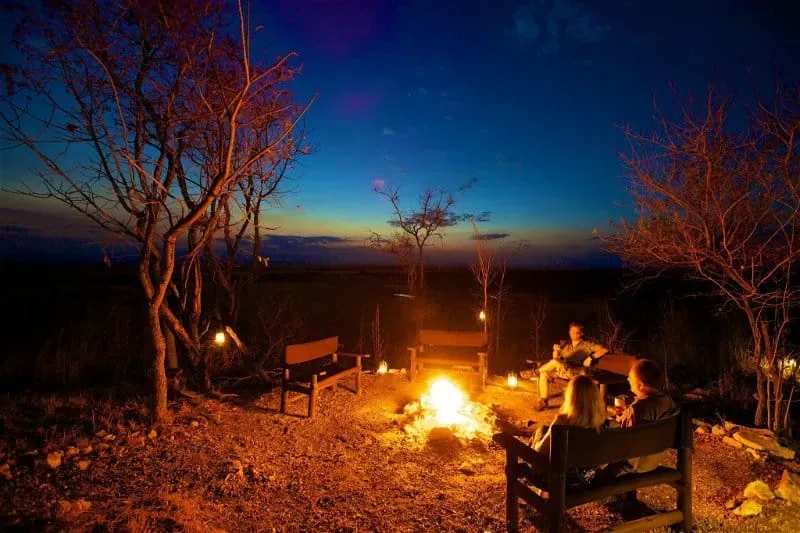
It is one of the most celebrated romantic safari experiences in Africa. The combination of an early shared adventure, the quiet of floating above one of the world's greatest landscapes at sunrise, and the intimacy of a bush breakfast afterward creates a very specific kind of memory — peaceful, spectacular and entirely unlike anything available on the ground.
It works particularly well for:
- Honeymoons and newly married couples
- Wedding anniversaries
- Significant birthday celebrations
- Romantic travel where the experience itself is the gift
- Proposals — see FAQ below for planning advice
Balloon Safari vs Traditional Game Drive: Do You Need Both?
These two experiences are not in competition — they're complementary. Choosing one over the other misses the point.
A game drive gets you close to individual animals. Your guide can read animal behaviour, track predators, position the vehicle for the best view and explain what you're seeing. The intimacy of a close lion encounter or a leopard sighting is the domain of the vehicle.
A balloon safari gives you the landscape. You see the ecosystem as a whole — the scale of the plains, the river systems, the movements of animals across open ground — in a way no vehicle can match.
The ideal itinerary includes both. Spend your game drives at ground level, close to wildlife, with a knowledgeable private guide. Dedicate one morning — ideally in the middle of your Serengeti stay rather than the first or last day — to the balloon.
Planning Tips for Honeymooners
A few practical points that make the balloon experience better for couples:
- Timing within your stay: Schedule the balloon safari in the middle of your Serengeti nights rather than on arrival or departure day. Your first day should be for settling in and your first game drive; your last day for final drives and preparation to move on. The balloon is most enjoyable when it's a highlight rather than a logistical event.
- Leave the rest of that day light: After a pre-dawn start and a full morning experience, resist the urge to fill the afternoon with more activities. Rest, enjoy your camp, read, watch wildlife from your veranda. A honeymoon should never feel like a schedule.
- Book early: Popular balloon operators fill up during peak season (July to October). Book well in advance, particularly if you're travelling during the migration period.
- Dress in layers: Pre-dawn temperatures can be surprisingly cold. Wear neutral-coloured comfortable clothing, closed shoes, and bring a fleece or light jacket.
- For a proposal: Speak to both your safari planner and the balloon operator before your travel date. Proposing during the celebratory breakfast on the ground is often easier to coordinate — and more private — than mid-flight.
Photography Advice for Your Balloon Flight
The balloon provides wide, panoramic views that reward wide-angle photography. Charge your batteries the night before, make sure you have enough storage space and bring a secure camera strap — you'll want both hands free at times. A moderate zoom helps with wildlife below.
Also take some photographs together. The landscape is extraordinary, but this is also your shared experience — and those are the images couples typically treasure most.
Combine Your Balloon Safari With Zanzibar
A Serengeti balloon flight fits naturally into a broader Tanzania honeymoon itinerary that ends on the coast. After the pre-dawn departures, game drives and campfire evenings of a Serengeti safari, Zanzibar's beaches offer a very different kind of experience: white sand, warm shallow water, sunset dhow cruises and no alarm clocks.
A popular sequence for honeymooners runs: Tarangire → Ngorongoro → Serengeti (with balloon safari) → Zanzibar. The contrast between the two environments — wild African plains followed by Indian Ocean coast — is part of what makes Tanzania such an exceptional honeymoon destination.
Frequently Asked Questions
Is a Serengeti hot air balloon safari safe?
Balloon flights are operated by professional companies with trained pilots and established safety procedures. Ballooning is weather-dependent, and pilots may delay or cancel flights when conditions are not suitable. Always book with a licensed, reputable operator and follow the crew's safety instructions throughout the experience.
How long is the balloon flight?
The flight is typically around one hour, though actual duration depends on wind and landing conditions. The full morning — including early transfer, preparation, safety briefing, flight, landing and bush breakfast — occupies most of the morning and should be treated as the primary activity for that day.
Will we definitely see wildlife during the flight?
No wildlife sighting can be guaranteed. What you see depends on your location, season, flight route and animal movements that morning. The aerial perspective is genuinely different from a game drive and can reveal patterns of movement invisible from the ground, but individual close encounters are the domain of the vehicle safari.
Can we see the Great Migration from a balloon?
Potentially, if large herds are in the area where you're flying. Migration movements are natural and unpredictable. Flying from Northern Serengeti during July to October, or from the southern ecosystem during January to March, gives the best chance of seeing significant herd concentrations from the air — but sightings cannot be guaranteed.
Can honeymoon couples book a private balloon?
Private arrangements may be possible with some operators depending on availability and budget. This is worth enquiring about when planning your safari, particularly for a honeymoon or anniversary. Request well in advance as private arrangements have limited availability during peak season.
Can I propose during the balloon safari?
Yes, and many couples have done so. Discuss your intention with both your safari planner and the balloon operator before your travel date. Depending on safety considerations during flight, proposing during the celebratory bush breakfast after landing may be easier to coordinate and more private than mid-flight.
What happens if the weather is bad?
Balloon flights require safe weather conditions. The operator may postpone or cancel a flight if conditions are not suitable on the morning. Check the operator's cancellation and refund policy carefully when booking — this is especially important if your balloon safari is scheduled close to your departure day.
Related Tanzania Travel Resources
- Serengeti National Park Travel Guide — complete overview of the park, wildlife, seasons and planning
- Best Romantic Mid-Range Lodges in Serengeti — camps and lodges suited to couples and honeymooners
- Best Time to Visit Serengeti — seasonal wildlife calendar and Great Migration guide
- Tanzania Romantic Safari — full honeymoon itinerary planning with safari and beach
- Zanzibar Honeymoon Guide — beach hotels and activities for a Zanzibar extension


Community Feedback